Pallet Washer
Need Expert Conveyor Solutions?
Our experienced engineers are here to help you choose the ideal Vertical Conveyor System for your application. From consultation and design to installation and support, we provide reliable solutions that maximize efficiency and performance.
Get in TouchAutomatic Pallet Washer for Industrial Pallet Cleaning
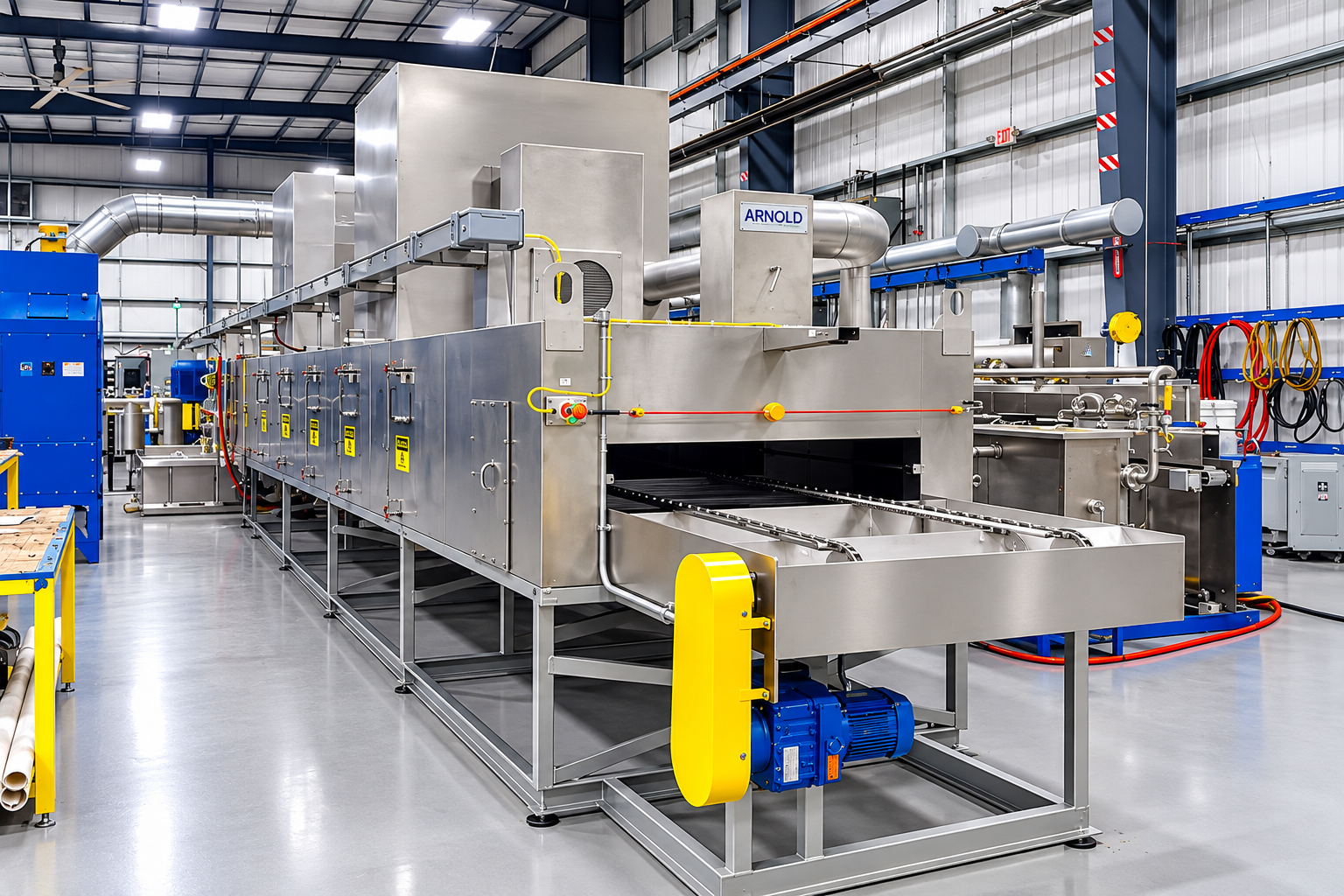
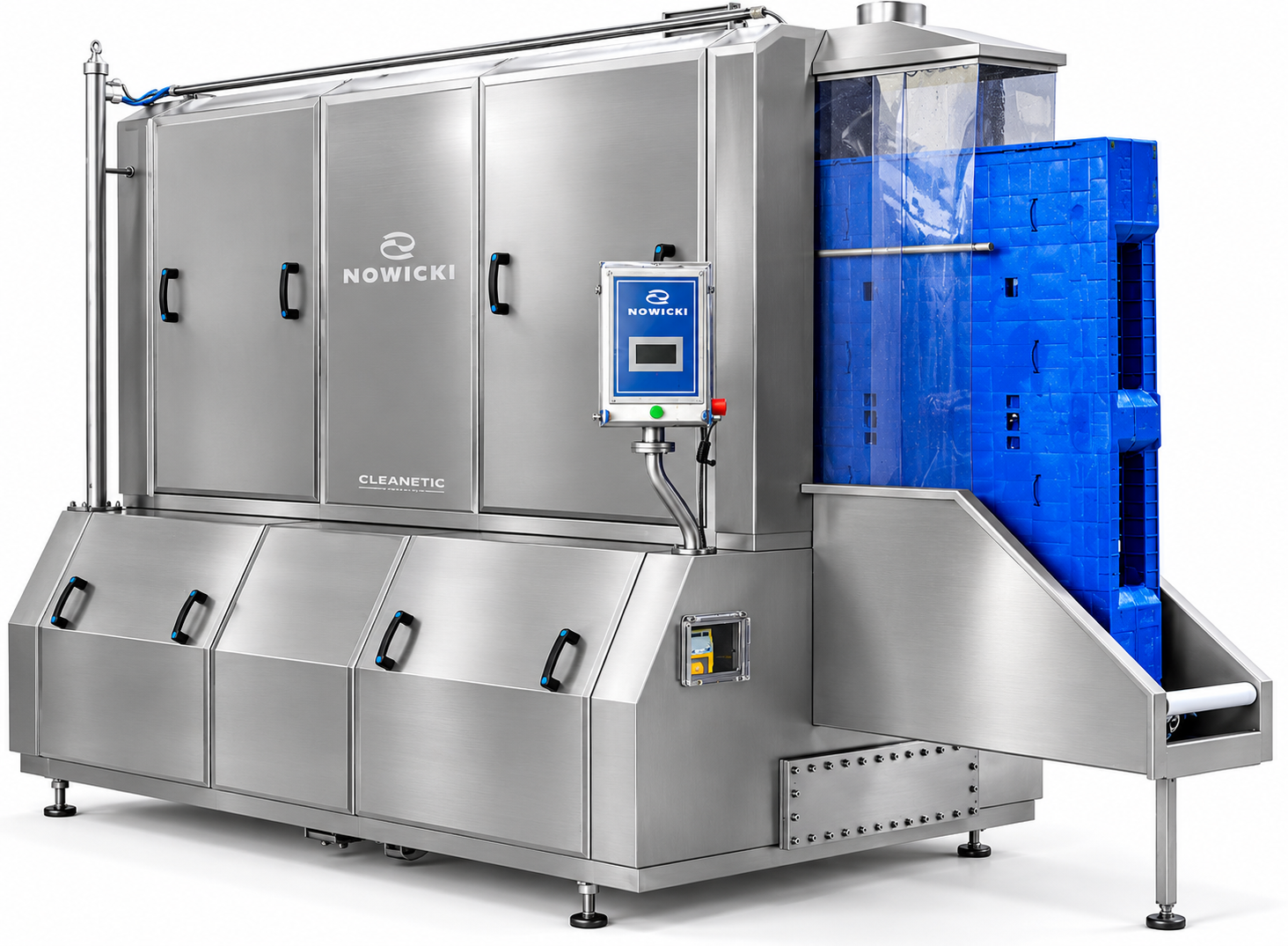
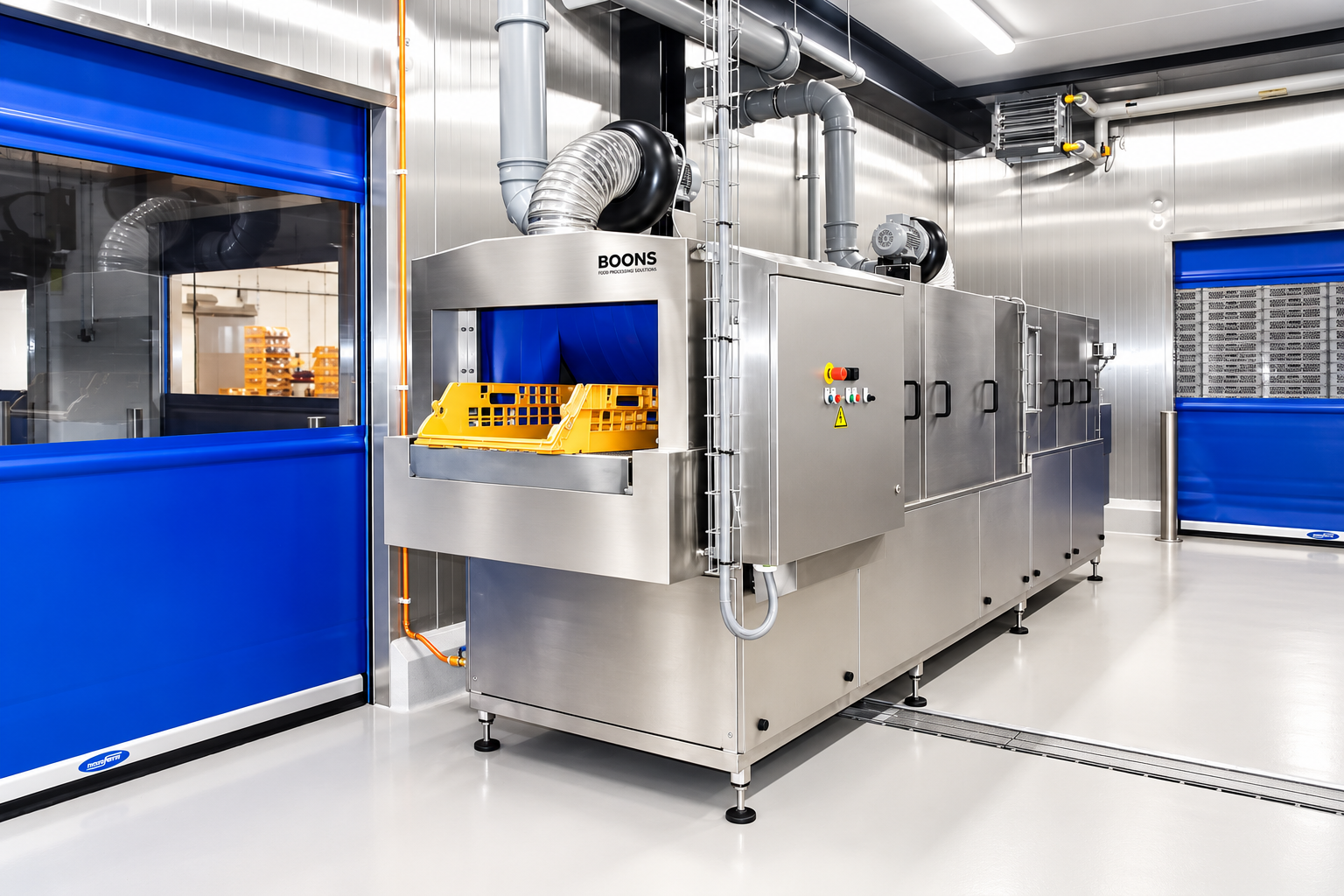
HYWAY Pallet Washers are industrial washing systems designed for the automated cleaning of reusable plastic pallets used in food processing, dairy, FMCG, cold-chain, warehousing, logistics and manufacturing operations.
The system can be configured with multiple cleaning stages such as pre-rinsing, detergent washing, high-pressure washing and final rinsing, depending on the pallet design, contamination level and required cleaning standard.
For high-volume operations, the pallet washer can be integrated with automatic pallet de-stacking, conveying, washing, drying and stacking systems to create a continuous pallet handling and cleaning line.
Think Vertical. Move Smart.
Key Features
- Automatic Pallet Washing – Continuous cleaning of reusable plastic pallets.
- High-Pressure Cleaning – Configurable spray system for effective cleaning of pallet surfaces.
- Multi-Stage Washing – Pre-rinse, detergent wash, high-pressure wash and final rinse can be configured according to application.
- Automatic Pallet Handling – Optional de-stacking and stacking systems for reduced manual handling.
- Water Recirculation – Process water can be collected, filtered and reused where appropriate.
- Application-Specific Filtration – Filtration arrangements can be selected according to contamination and water-reuse requirements.
- Optional Drying – Hot-air drying can be incorporated where required.
-
PLC-Based Automation – Washing, conveying, pumps, heating and other functions can be coordinated through an automated control system.
-
Customized Construction – Machine construction and components can be selected according to operating and hygiene requirements.
How Does a Pallet Washer Work?
The pallet is introduced into the washing system manually or through an automated pallet handling arrangement.
Depending on the selected configuration, the pallet passes through a series of cleaning stages:
The exact sequence can be customized according to the contamination, pallet design and required cleaning standard.
During the washing process, strategically positioned nozzles spray water or cleaning solution onto the pallet surfaces. Process water can be collected in dedicated tanks and passed through suitable filtration before recirculation.
After cleaning, the pallet can be discharged individually or transferred to an automatic stacking system.
Pallet Washer Applications
Food Processing
For cleaning reusable pallets used in food manufacturing, processing and distribution.
Typical applications:
- Food processing
- Fruits & vegetables
- Dairy products
- Meat and poultry
- Bakery
- Packaged food
- Snacks
Dairy & Ice Cream
Suitable for reusable pallets used for movement and storage of dairy and frozen products.
FMCG
Pallet washers can be used for reusable plastic pallets circulating between manufacturing, warehousing and distribution facilities.
-
Cold Chain & Frozen Food – The system can be configured for pallets used in temperature-controlled supply chains where regular cleaning is required.
-
Warehousing & Logistics – Automated pallet washing can be incorporated into returnable pallet handling systems used by warehouses, distribution centers and logistics operations.
-
Manufacturing – Suitable for industrial applications where reusable plastic pallets are used to transport components, parts or finished products.
Pallet Washer Configurations
-
Standalone Pallet Washer – A standalone system for operations where pallets are manually loaded and unloaded.
-
Pallet Washer with Dryer – A drying section can be incorporated when pallets need to be returned to service with reduced residual moisture.
-
Pallet Washer with De-Stacker & Stacker – For high-volume operations, the washer can be integrated with automatic pallet handling.
Typical arrangement:
This configuration can reduce manual pallet handling and support continuous operation.
Pallet Washer Cleaning Stages
1. Pre-Rinse
Removes loose dirt, dust and surface contamination before the main washing stage.
2. Detergent Washing
A cleaning solution is sprayed over the pallet to loosen and remove adhered contamination.
3. High-Pressure Washing
A dedicated high-pressure spray stage can be incorporated where higher cleaning intensity is required.
4. Final Rinse
A final rinse removes remaining detergent and loosened contaminants.
5. Drying
Where required, hot-air drying can be incorporated to reduce residual moisture before stacking or reuse.
Technical Specifications
|
Parameter |
Typical Configuration |
|
Machine Type |
Automatic industrial pallet washer |
|
Pallet Type |
Reusable plastic pallets |
|
Pallet Size |
As per application |
|
Capacity |
As per requirement |
|
Washing Stages |
Pre-rinse / wash / high-pressure wash / final rinse |
|
Washing Pressure |
As per application |
|
Water Temperature |
As per cleaning requirement |
|
Nozzles |
Selected according to pallet geometry |
|
Pumping System |
Application-specific |
|
Water Recirculation |
Available as required |
|
Filtration |
Application-specific |
|
Drying |
Optional |
|
Heating |
Electric / steam / other, as required |
|
Construction |
SS304 / application-specific |
|
Pallet Handling |
Manual / automatic |
|
De-Stacker |
Optional |
|
Stacker |
Optional |
|
Controls |
PLC-based |
Final specifications are selected according to pallet dimensions, pallet design, contamination level, required throughput, cleaning standard and site conditions.
Pallet Sizes
HYWAY pallet washers can be engineered around different reusable plastic pallet dimensions.
For applications involving multiple pallet sizes, the washing and handling system can be engineered accordingly.
The machine design should consider:
- Pallet length and width
- Pallet height
- Pallet weight
- Deck configuration
- Bottom construction
- Openings and support ribs
- Contamination characteristics
- Required washing intensity
Water Management & Filtration
Water management is an important part of an industrial pallet washing system.
HYWAY pallet washers can incorporate collection tanks, filtration and water-recirculation arrangements to manage process water.
The water-management system can be designed based on:
- Contamination load
- Solids entering the system
- Required water quality
- Fresh-water consumption
- Recirculation requirements
- Cleaning frequency
- Pumping requirements
Different filtration stages can be incorporated where required to protect pumps and maintain suitable process-water quality.
Automatic Pallet Washing & Handling System
For larger operations, HYWAY can provide the pallet washer as part of an integrated pallet handling system.
Typical Automated Flow
Why Choose HYWAY Pallet Washers?
- Designed Around Your Pallet – The washing system is engineered around pallet dimensions, geometry, weight and contamination rather than relying on a one-size-fits-all configuration.
- Automated Pallet Handling – The washer can be combined with automatic de-stacking and stacking equipment for high-volume operations.
- Flexible Cleaning Process – Cleaning stages, temperature, pressure, filtration and drying can be configured according to the application.
- Integration with Material Handling – The pallet washer can be integrated with conveyors and other material-handling equipment to create a complete automated pallet flow.
- Food & Industrial Applications – The system can be configured for applicable food, dairy, FMCG, cold-chain, logistics and industrial environments.
Industries We Serve
- Food Processing
- Dairy
- Ice Cream
- FMCG
- Snacks & Bakery
- Fruits & Vegetables
- Quick Commerce
- E-Commerce
- Warehousing & Logistics
- Manufacturing
Frequently Asked Questions
- Pallet dimensions
- Pallet weight
- Pallet construction
- Number of pallets per hour
- Type of contamination
- Required cleaning standard
- Water and temperature requirements
- Drying requirement
- Available utilities
- Available installation space
- Requirement for automatic stacking/de-stacking
Call to Action
Need Expert Conveyor Solutions?
Our experienced engineers are here to help you choose the ideal Vertical Conveyor System for your application. From consultation and design to installation and support, we provide reliable solutions that maximize efficiency and performance.
Get in TouchZPA Roller Conveyor for Controlled Product Accumulation
HYWAY Zero Pressure Accumulation (ZPA) Roller Conveyors are designed to buffer and release cartons, totes, and other compatible unit loads in a controlled manner. By dividing the conveyor into independently controlled zones, products can accumulate without being pushed continuously against one another.
ZPA conveyors are used in automated warehouses, distribution centers, packaging lines, and manufacturing facilities where smooth product flow, temporary buffering, and controlled release are required.
Think Vertical. Move Smart.
Key Features
-
Zero Pressure Accumulation: Helps prevent products from pressing against each other during accumulation.
-
Independent Conveyor Zones: Each zone can be controlled according to product presence and downstream availability.
-
Controlled Product Release: Supports single or grouped product release, depending on the control logic.
-
Flexible System Layout: Can be configured as straight accumulation lines or integrated into larger conveyor networks.
-
Automation Ready: Can interface with suitable sensors, PLCs, and warehouse control systems.
-
Application-Based Design: Roller type, zone length, load capacity, and control arrangement selected to match the conveyed product.
How Does a ZPA Roller Conveyor Work?
A ZPA conveyor is divided into a series of zones, each with its own drive or controlled drive section and product-detection arrangement. When the downstream zone is occupied, the upstream zone holds its load. Once the next zone becomes available, the product is released according to the configured control sequence.
This zoning method helps manage accumulation while reducing product-to-product contact. The exact behavior—such as zero-pressure control, release spacing, and accumulation sequence—depends on the conveyor design and control system.
Typical applications:
- Automated warehouses and distribution centers
- E-commerce and parcel sorting facilities
- Carton accumulation before packing or dispatch
- Packaging and end-of-line production
- Manufacturing and assembly lines
- Buffering between machines with different operating speeds
- Conveyor interfaces with sorters and automated storage systems
Reduced Product Contact
Products can be held in separate zones rather than being continuously pushed together, helping reduce contact pressure and potential damage
Smoother Material Flow
Zone-based control allows products to move forward when downstream space becomes available, helping manage temporary blockages and variations in line speed.
Flexible Buffering
The conveyor can provide temporary storage between processes, supporting smoother transfer between machines or work areas.
Automation Integration
ZPA conveyors can be integrated with sensors and control systems to coordinate product movement with upstream and downstream equipment.
Technical Specifications
|
Parameter |
Typical configuration |
|
Conveyor type |
Zero Pressure Accumulation (ZPA) roller conveyor |
|
Conveyed products |
Cartons, totes and compatible unit loads |
|
Drive arrangement |
Zone-based, as per design |
|
Roller type |
Steel or other suitable roller option, as per application |
|
Roller diameter and pitch |
As per product dimensions and load |
|
Zone length |
As per product length and accumulation requirement |
|
Load capacity |
As per application |
|
Conveyor width |
As per product dimensions |
|
Conveying speed |
As per throughput and process requirements |
|
Product detection |
Photoelectric or suitable sensing arrangement |
|
Control system |
PLC or zone controller, as specified |
|
Layout |
Straight or integrated conveyor sections |
|
Integration |
As per upstream/downstream equipment and control interface |
Final specifications depend on the conveyed product, throughput, accumulation length, layout, and selected drive and control system.
Customized to Your Material Flow
HYWAY can configure ZPA roller conveyor systems around your product and process requirements, including:
- Product dimensions and maximum unit weight
- Required throughput and conveying speed
- Number of accumulation zones
- Required buffer length and accumulation capacity
- Roller type, diameter, and pitch
- Conveyor width and installation height
- Sensor and control requirements
- Interface with existing conveyors, machines, or warehouse systems